
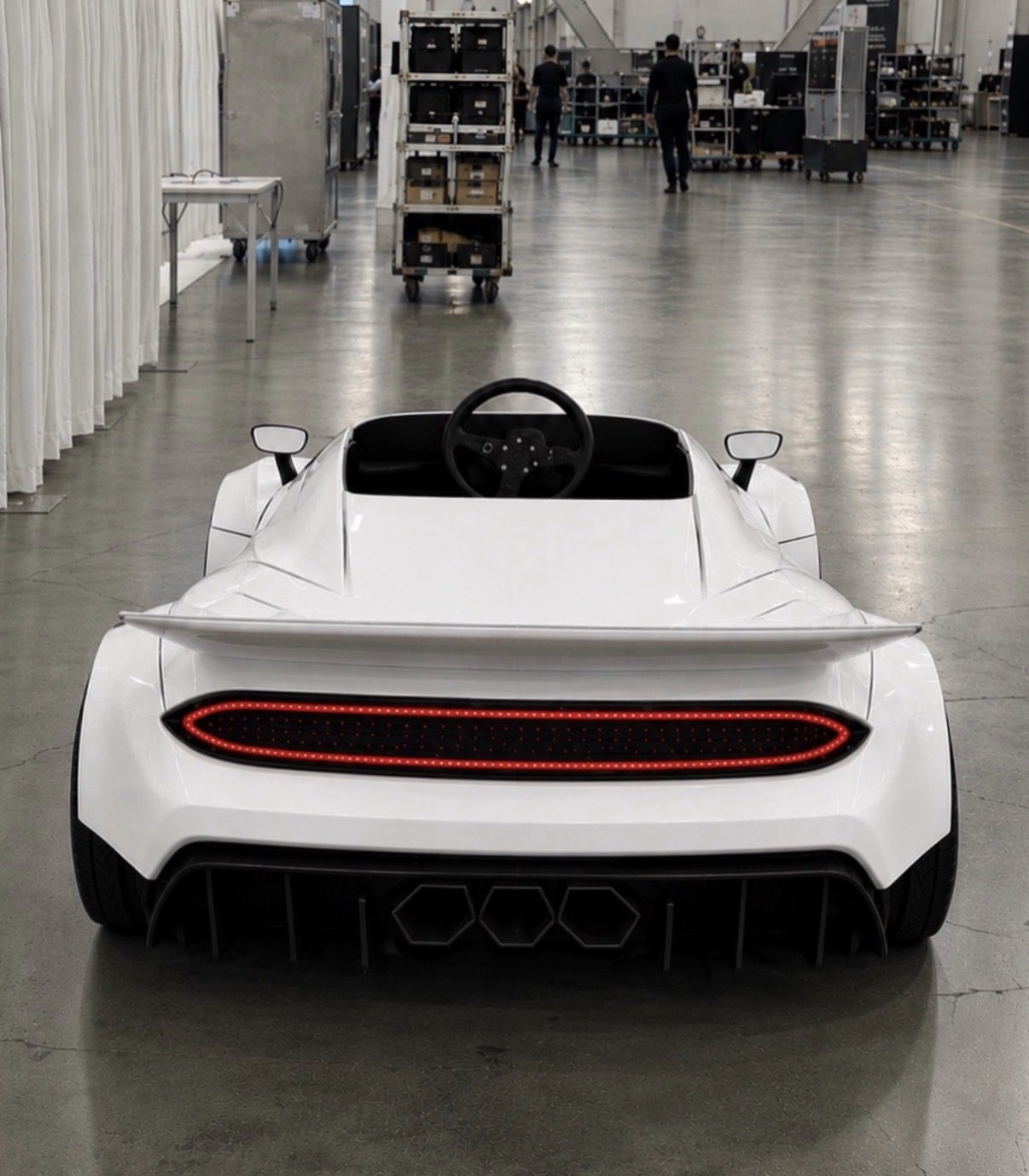
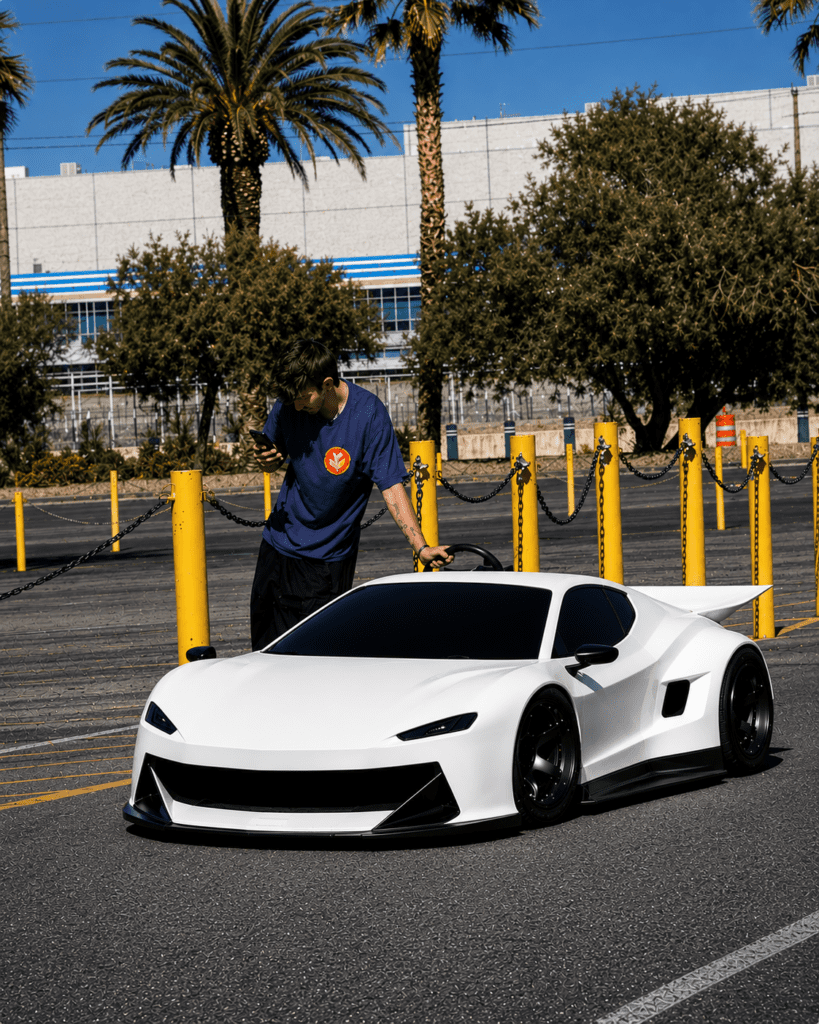
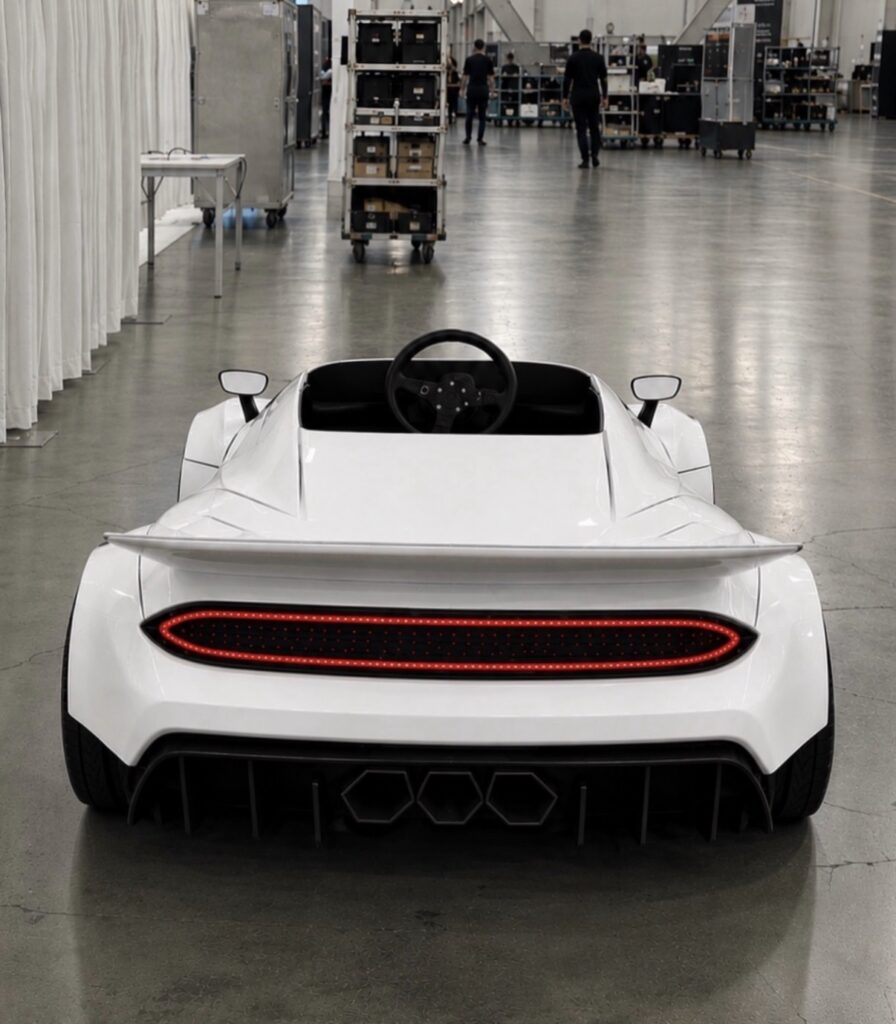
As the automotive industry continues to accelerate development cycles, large-format additive manufacturing (LFAM) is becoming a powerful tool for transforming digital concepts into physical prototypes. Cross Industry Dynamics recently collaborated with Lil Zoomers to produce a full-scale hypercar prototype, demonstrating how advanced 3D printing can dramatically reduce the time and cost associated with traditional vehicle development.
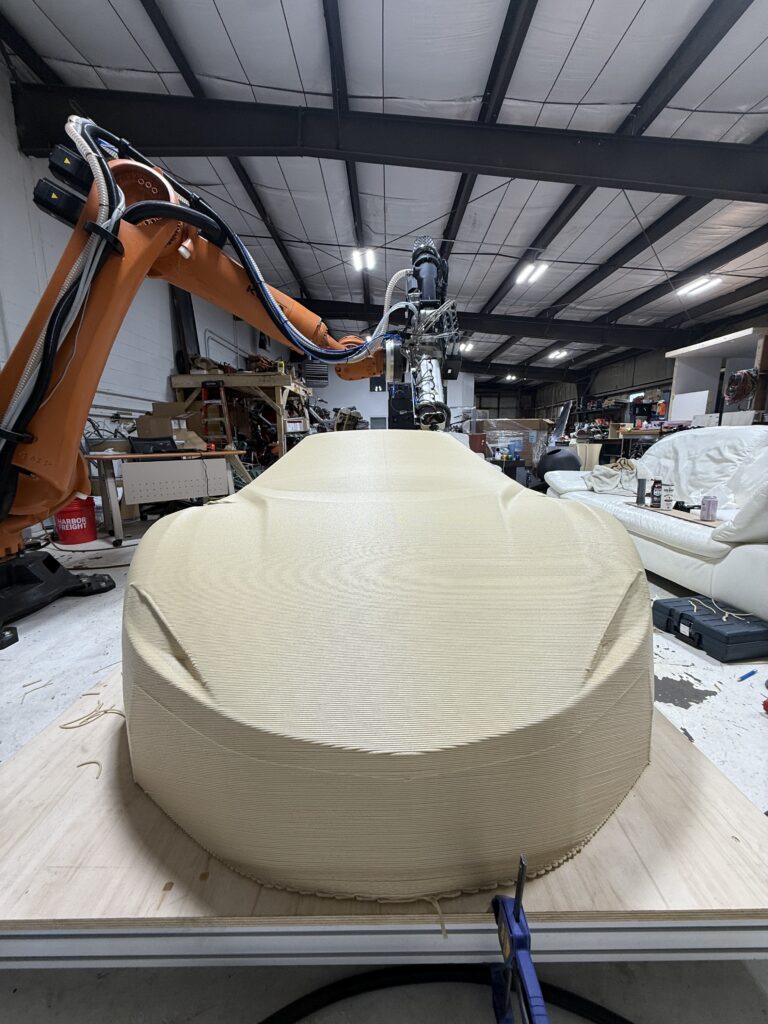
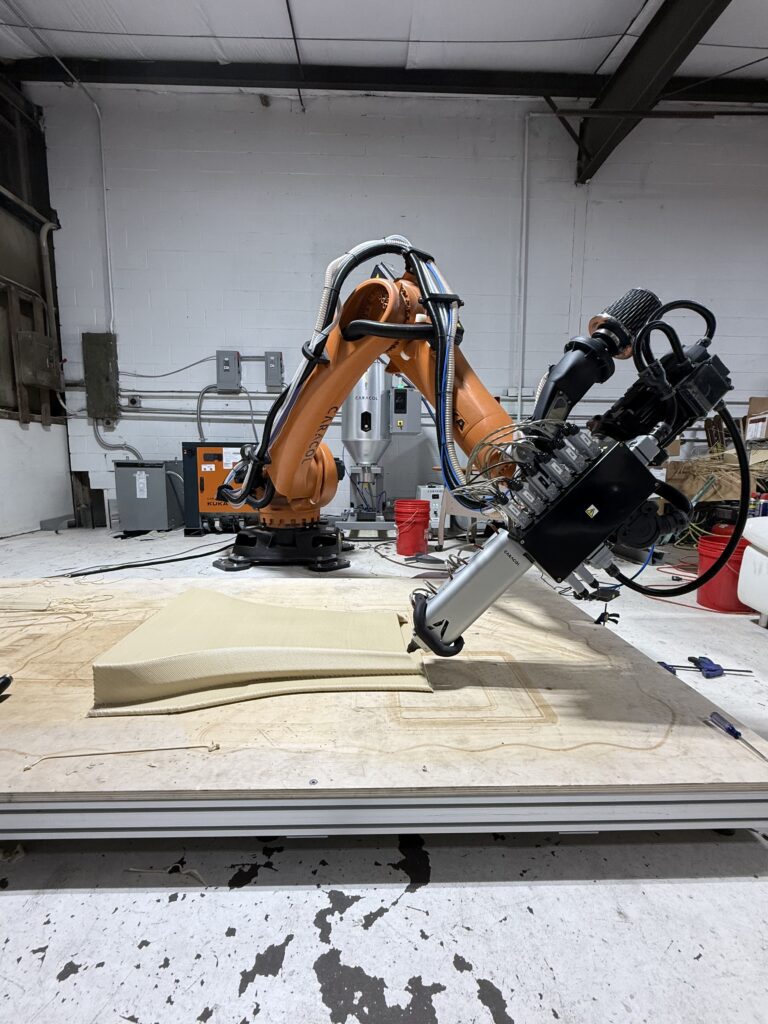
The prototype was manufactured using glass-fiber-reinforced PETG (PETG-GF) on a robotic large-format additive manufacturing system. By eliminating the need for molds, tooling, and conventional fabrication processes, the project moved from CAD model to full-scale vehicle body in a fraction of the time required by traditional automotive prototyping methods.
We were able to transform an idea, a prototype, and an unfinished CAD file into a full-fledged, functional 1/3-scale car for lil zoomers within two weeks.
This rapid development cycle allowed the team to move from concept visualization to a tangible product suitable for evaluation, marketing, and stakeholder presentations without the delays associated with traditional manufacturing methods.
One of the greatest advantages of large-format additive manufacturing is the ability to iterate quickly. Automotive designers and startups often face high costs when producing physical prototypes through conventional fabrication techniques. LFAM allows teams to validate proportions, styling, ergonomics, and assembly considerations early in the development process while maintaining the flexibility to implement design changes as projects evolve.
For emerging vehicle manufacturers, this capability can dramatically reduce development risk. Rather than investing heavily in tooling before a design has been validated, companies can produce full-scale or partial-scale prototypes that accurately represent the final product. This approach accelerates decision-making, improves communication with investors and partners, and provides valuable real-world feedback before production begins.
The Lil Zoomers project also highlights the versatility of PETG-GF as a material for automotive prototyping. The glass-fiber reinforcement provides increased stiffness and dimensional stability, making it well-suited for large-scale vehicle components and exterior body panels. Combined with robotic additive manufacturing, the material enabled the creation of complex curves and aggressive styling features while maintaining the structural integrity required throughout the finishing process.
Creativity in Automotive Design Unleashed
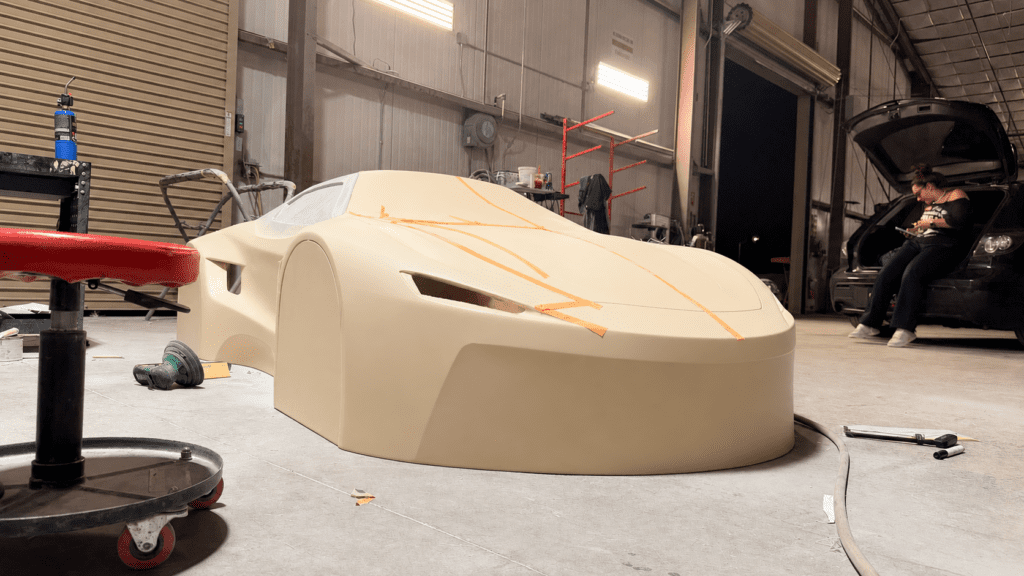
Following the printing process, the body underwent extensive finishing and surface refinement to achieve an automotive-grade appearance. The resulting prototype provided a highly accurate representation of the final vehicle design, allowing for design validation, marketing content creation, investor demonstrations, and pre-production visualization.
The ability to create large, complex geometries without tooling restrictions opens new possibilities for automotive design. Designers are free to explore ambitious forms, aerodynamic surfaces, and unique styling elements without the manufacturing constraints that often limit early-stage vehicle development. As additive manufacturing technologies continue to mature, the gap between concept and production-ready prototype continues to shrink.
Projects like the Lil Zoomers hypercar showcase how LFAM is changing the future of automotive manufacturing, whether developing concept vehicles, custom bodywork, low-volume production components, or full-scale prototypes, large-format 3D printing offers manufacturers a faster and more flexible path from design to reality.
Following the printing process, the body underwent extensive finishing and surface refinement to achieve an automotive-
grade appearance. The resulting prototype provided a highly accurate representation of the final vehicle design, allowing for design validation, marketing content creation, investor demonstrations, and pre-production visualization.
For companies looking to accelerate vehicle development, reduce prototyping costs, and bring innovative products to market faster, LFAM is rapidly becoming an essential tool in the modern automotive design and manufacturing workflow. Whether developing concept vehicles, custom bodywork, marketing-ready prototypes, or low-volume production components, large-format additive manufacturing offers a faster and more flexible path from CAD model to physical product.
At Cross Industry Dynamics, we partner with innovators, startups, and established manufacturers to transform ambitious ideas into tangible prototypes through advanced robotic additive manufacturing.
As demonstrated by the Lil Zoomers hypercar project, LFAM enables organizations to move from concept to reality in weeks rather than months, helping teams validate designs, engage stakeholders, and accelerate product development with confidence.